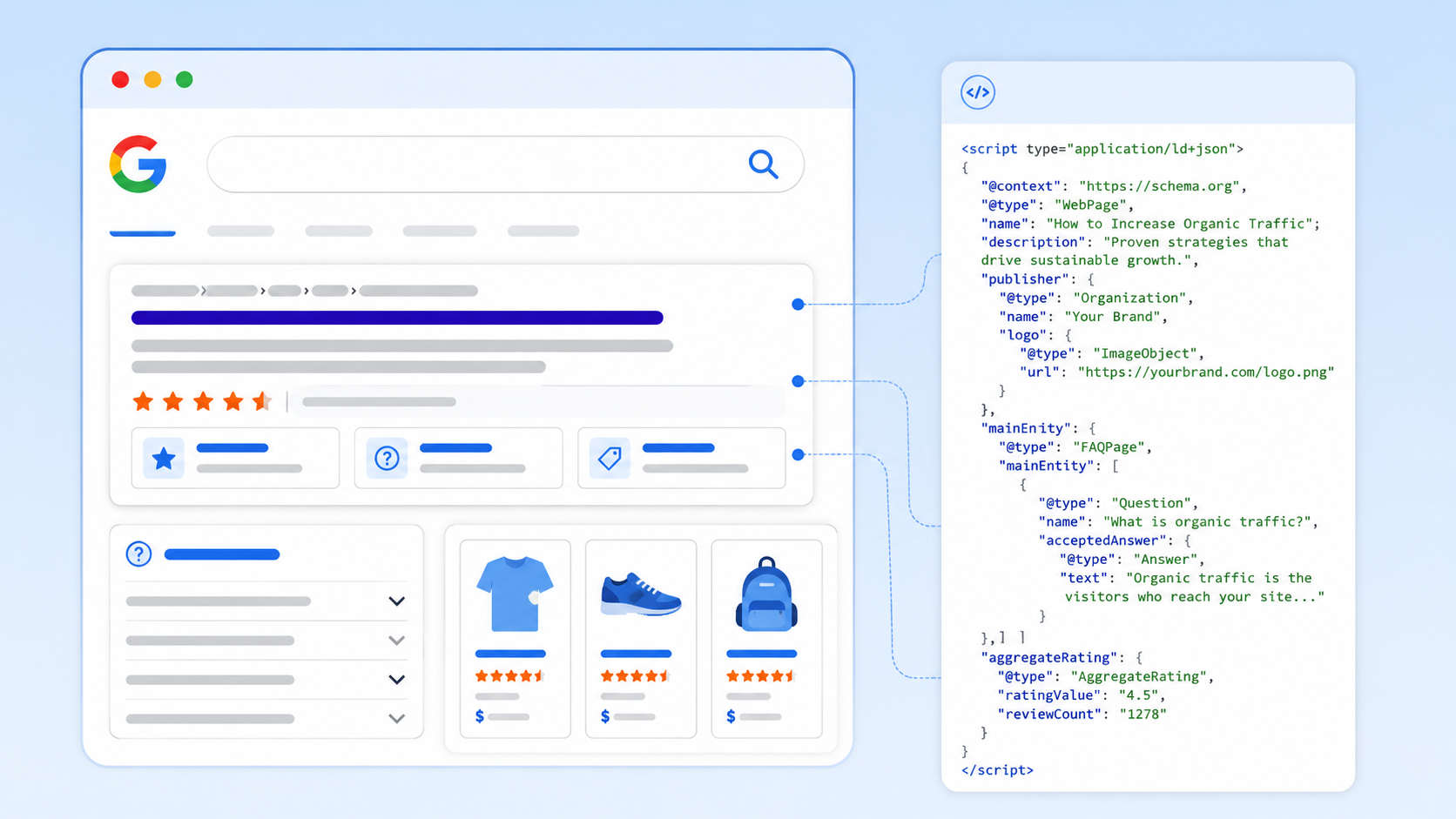
Organic traffic works like an index fund, not a billboard you rent, every page you improve can keep compounding for years. But the deposits that pay off in 2026 have changed. The growth now comes from refreshing what you have, fixing technical and linking debt, and making content readable by both Google and the AI engines now answering searches directly.
What Is Organic Traffic?
Organic traffic is the visitors who reach your site through unpaid search-engine results. When someone searches a query and clicks a listing you didn’t pay for, the visit counts as organic, distinct from paid ads, direct visits, referrals, and social traffic.
Each source behaves differently once you stop working on it.
| Traffic source | How you get it | Cost per visit | Durability |
| Organic search | Ranking in unpaid results | None (after the work) | Compounds for years |
| Paid search | Bidding on ads | Per click, forever | Stops when budget stops |
| Direct | Users typing your URL | None | Tied to brand awareness |
| Referral | Links from other sites | None | Depends on the referring page |
| Social | Posts and shares | Time or ad spend | Short, spiky lifespan |
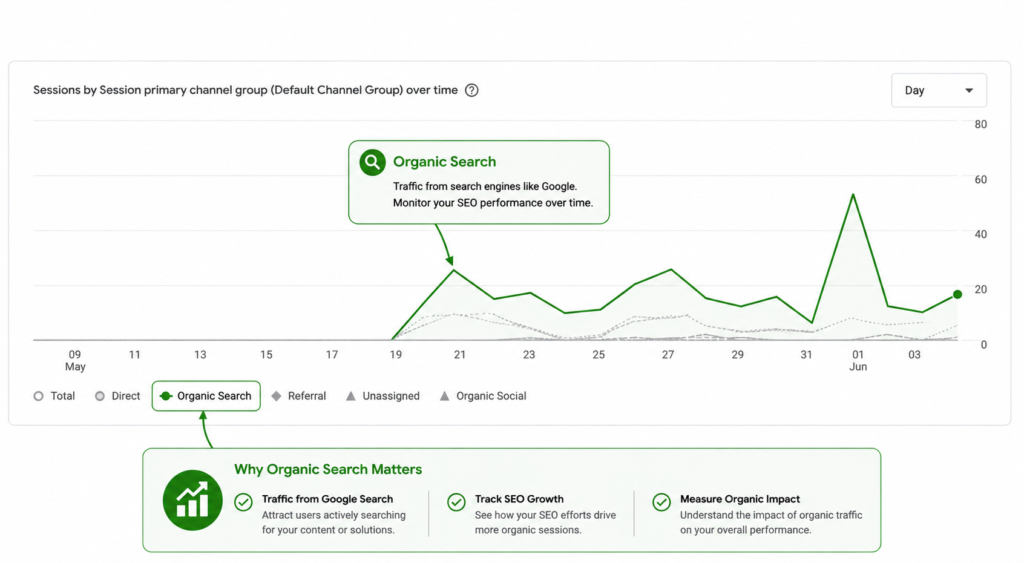
The Organic Search channel in GA4, isolated from paid, direct, referral, and social sources.
How Organic Traffic Works
Search engines run a four-step loop: crawl to find pages, index the ones they can parse, rank them against a query, and serve the best matches. Miss any step and the traffic never arrives, no matter how good the writing is.
Why Organic Traffic Matters for Long-Term Business Growth
Paid traffic is rented; the moment you stop paying, it disappears. Organic traffic, once earned, keeps working, which is why the average page ranking #1 in Google is roughly five years old, according to Ahrefs. Authority compounds, driving your blended acquisition cost down every month a page survives.
How to Measure Organic Traffic Accurately
Google Analytics 4 shows what happens after the click (sessions, conversions) under the Organic Search channel. Google Search Console shows what happens before it (impressions, position, the exact queries). Use Search Console to spot pages losing impressions and GA4 to confirm the lost sessions.
Why Organic Traffic Is Harder to Win in 2026
Doing everything right no longer guarantees the click. AI Overviews now sit above organic results on many searches and absorb clicks that once reached websites. Ahrefs found their presence correlates with a 58% lower click-through rate for the top-ranking page.
A 58% lower click-through rate means a page can hold its #1 ranking and still lose more than half its traffic.
Seer Interactive measured organic CTR falling from 1.76% to 0.61% on AI Overview queries, and a randomized study found clicks cut 38%. Ranking is now table stakes, not the finish line.
The Impact of AI Search and AI Overviews
Exposure is uneven: AI Overviews hit informational and comparison queries hardest and transactional ones least. Two responses work: earn citation inside the overview, and lean into queries where AI answers haven’t taken over.
Why Topical Authority Matters More Than Ever
When an engine or LLM must choose which source to trust, depth wins. Comprehensive coverage is the practical face of E-E-A-T, experience, expertise, authoritativeness, trust, demonstrated by being the most complete resource, not by claiming it.
Start With Keyword Research and Search Intent
Every durable strategy starts here: find what your audience searches, then decide which searches you can realistically win. Skip it and you rank for terms nobody searches.
How to Find Keywords That Drive Organic Traffic
Start with seed terms, expand them with a keyword tool, Search Console data, and Google’s “People also ask.” Then filter for opportunity: terms where the current top results are weak, outdated, or mismatched to intent.
Prioritize Search Intent Over Search Volume
Volume tells you how many people search; intent tells you whether they convert. The four types:
- Informational: “what is organic traffic”
- Commercial: “best seo plugin”
- Navigational: “search console login”
- Transactional: “buy standing desk”
Match your page to the dominant intent the current top results reveal.
Find Long-Tail Keywords With Lower Competition
Long-tail queries are longer and more specific, with lower volume and competition. They convert better, rank faster, and trigger featured snippets disproportionately.
Analyze Competitor Keywords for Content Opportunities
Run a content-gap analysis to find keywords competitors rank for and you don’t. Each gap is a page to create or expand; prioritize commercial-intent terms.
Create Content That Wins Organic Traffic
Content quality is still the largest lever on organic traffic. In 2026, comprehensive and useful beats frequent and shallow.
Cover Topics More Comprehensively Than Competitors
Cover the main question, the follow-ups, the edge cases, and the related entities. A test: could a reader finish your page and still need three competitor tabs? If so, cover more.
Build Content Around User Questions
Real questions match how people search, map to “People also ask,” and are the exact format AI engines extract. Mine Search Console and support tickets, then answer each directly.
Create Content for Every Stage of the Customer Journey
Map content to awareness (explainers), consideration (comparisons, how-tos), and decision (case studies, product detail) so you capture demand at every stage, not just the bottom.
Use Multiple Content Formats to Expand Reach
Different formats reach different searchers and open up different SERP features:
- Articles and guides for depth and keyword coverage
- Videos for tutorials and the video carousel
- Free tools and calculators that earn links naturally
- Templates and checklists that get saved and shared
- Case studies that demonstrate experience
A tool that solves a real problem often out-earns a dozen posts.
Refresh Existing Content Before Publishing More
Do one thing after reading this: improve what you already published before writing more.
The math is overwhelming. HubSpot’s historical optimization raised monthly organic views ~106% and more than doubled leads; Backlinko relaunched one piece and saw a 260.7% lift in 14 days. An existing page already carries age, links, and ranking history, improving it converts stored authority into traffic. Freshness also feeds AI visibility: AI-cited content is 25.7% fresher.
Update Outdated Information
Content decays: stale stats, old screenshots, outdated advice. Audit top pages for anything tied to a date, price, or version and bring it current. Updating real information, not just the date, is what moves rankings.
Improve Content Relevance and Topical Coverage
The page-two terms in a page’s Search Console report are the subtopics you under-covered. Add the missing sections, entities, and questions.
Refresh Pages With Declining Organic Traffic
Sort pages by trend and find the ones sliding. Because they already ranked, recovery is far faster than ranking something new.
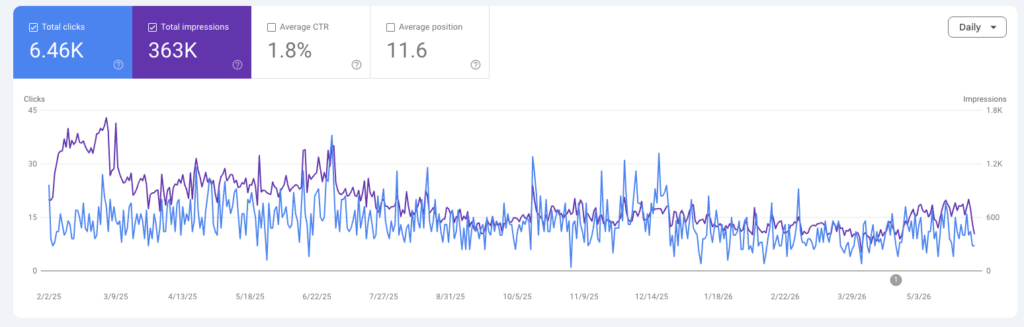
A page in measurable decline in Search Console, the fastest refresh candidate, because the ranking already exists.
Expand Thin or Underperforming Content
Thin pages rarely rank and increasingly get absorbed into AI answers. Expand them with genuine depth, or consolidate several into one strong resource.
Improve Your On-Page SEO
On-page SEO is everything you control on the page: intent match, title, structure, and media, your highest-control, fastest-feedback levers.
Match Search Intent More Effectively
Confirm the page answers the query’s intent first. If the top results are step-by-step guides and yours is a sales page, re-align the format before tuning anything else.
Optimize Title Tags for Higher Click-Through Rates
The title is the most-tested element in search because it changes traffic without a ranking change. Front-load the keyword, stay under ~60 characters, and give a concrete reason to click. Test against a SERP snippet preview tool, and on WordPress, plugins like Yoast, Rank Math, and Schemafy let you edit and preview titles in bulk. Remember: a better title raises CTR, not necessarily ranking.
Improve Content Structure and Readability
Use a clear heading hierarchy, short paragraphs, and lists or tables where they fit. A logical structure also makes content far easier for AI engines to parse into answers.
Optimize Images and Media Assets
Compress images, use descriptive file names, and write alt text that states what the image shows. Alt text serves accessibility first, but also gives engines context and a shot at image-search traffic.
Build Internal Links That Increase Organic Traffic
Internal linking is the most underused free lever in SEO: it costs nothing and you fully control it.
Why Internal Links Increase Organic Traffic
Internal links pass authority from strong pages to ones that need a boost and help engines discover how content relates. Point links from your strongest pages to the ones you want to rank, with descriptive anchor text.
How to Find Internal Linking Opportunities
Search your own site (site:yourdomain.com [topic]) for pages that should link to a target. Every time you publish or refresh, add contextual links to and from related content.
Fix Orphan Pages
An orphan page has no internal links pointing to it, so engines barely value it. Crawl your site, list the orphans, and give each a few contextual links. This alone can recover invisible pages.
Use Topic Clusters to Strengthen Authority
Organize related content into clusters: one pillar page tightly linked to supporting articles. This concentrates topical authority and lifts the whole cluster.
Fix Technical SEO Issues That Limit Organic Growth
Technical SEO is the foundation everything sits on. Great content won’t rank if crawlers can’t reach, render, or trust it.
Improve Site Speed and Core Web Vitals
Core Web Vitals measure loading, interactivity, and stability, and feed Google’s page-experience signals. Compress images, defer non-critical scripts, and fix the largest offenders in PageSpeed Insights first.
Make Your Website Mobile-Friendly
Google indexes the mobile version first. If your mobile experience is cramped or slow, that’s the version being judged. Test on real devices.
Improve Crawlability and Indexability
Keep an accurate XML sitemap, use robots.txt deliberately, set canonical tags to the version you want indexed, and don’t waste crawl budget on thin URLs.
Fix Duplicate Content Issues
Duplicate pages split ranking signals so neither wins. Consolidate, canonicalize, or noindex the copies. Common culprits are URL parameters and tag archives.
Resolve Keyword Cannibalization
When several pages compete for one query, Google gets confused about which to rank. Consolidate them into one stronger resource or differentiate their intent.
Redirect Dead Pages With Valuable Backlinks
Before deleting an old page, check its backlinks. A 404 throws away every link. 301-redirect dead-but-linked pages to the most relevant live page so authority transfers.
Use Schema Markup to Improve Search Visibility
Schema markup is structured data that tells engines exactly what your content represents instead of making them guess. It doesn’t raise rankings on its own. It makes pages eligible for richer results. Industry studies commonly attribute CTR gains of 20–30% to rich results, because stars or FAQs take more space and earn more trust.
How Schema Markup Helps Search Engines Understand Content
Engines and AI systems increasingly reason in entities and their relationships. Schema spells those out in JSON-LD, the format Google recommends, so “Apple” is explicitly a company rather than inferred.
Schema Types That Can Increase Organic Visibility
| Schema type | What it can surface |
| Article | Headline, author, date |
| FAQPage | Expandable questions under your listing |
| Product | Price, availability, ratings |
| Review / AggregateRating | Star ratings |
| Organization | Knowledge-panel / entity recognition |
| LocalBusiness | Hours, address, map details |
| BreadcrumbList | Breadcrumb path in the SERP |
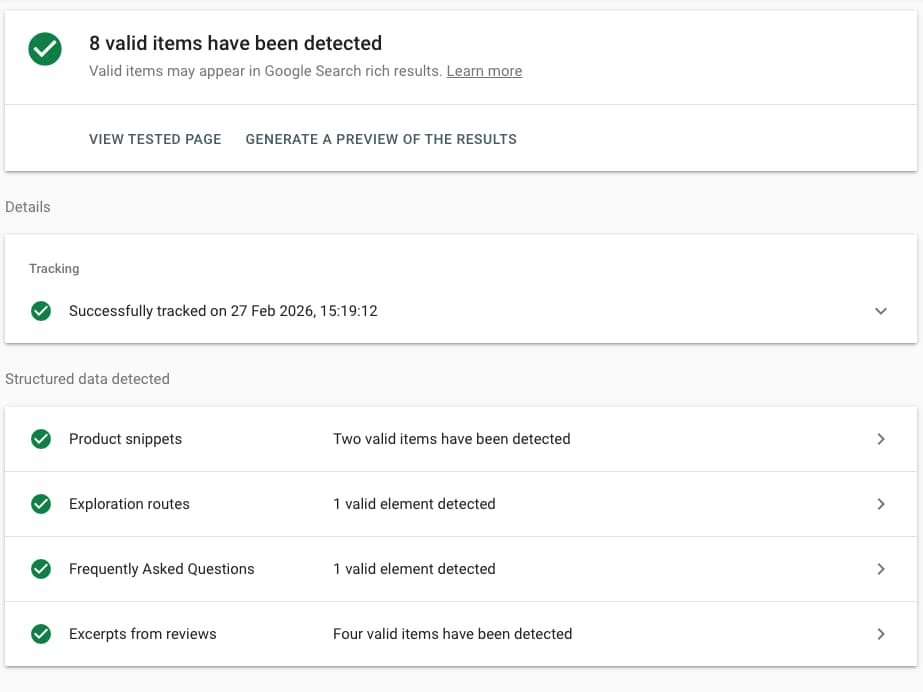
Google’s Rich Results Test confirming valid FAQ markup, the validation step before any schema goes live.
How to Implement Schema Markup Correctly
Add markup as JSON-LD and validate it with Google’s Rich Results Test before publishing; mark up only content that genuinely appears on the page. On WordPress you can hand-write it, use a free schema markup generator, or let a plugin such as Schemafy generate the right types automatically, the practical route for hundreds of pages.
Earn Backlinks That Drive Organic Traffic
Backlinks remain one of the strongest trust signals: when credible sites link to you, engines treat it as authority.
How Important Are Backlinks for Increasing Organic Traffic?
For competitive queries, backlinks often decide between two equally good pages. For low-competition long-tail terms, great content can rank with few links.
What Makes a High-Quality Backlink
A quality link is topically relevant, comes from an authoritative site, and sits in editorial context. One link from a respected publication outweighs hundreds from directories.
Link Building Strategies That Still Work in 2026
- Digital PR: original data journalists cite (rated the most effective link tactic by 48.6% of SEOs surveyed)
- Original studies: research others link to as the source
- Free tools: a calculator that earns links passively for years
- Partnerships: co-marketing with relevant sites
Reclaim Lost Backlinks and Brand Mentions
Find pages linking to a URL that now 404s and redirect it; find unlinked brand mentions and ask for the link. Both convert near-misses into real authority.
Improve User Experience to Support SEO Performance
Engines send people to pages that satisfy them. A frustrating page sends users back to the SERP, a signal that never helps you.
Improve Site Navigation and Architecture
A shallow, clear structure helps users and crawlers reach every page. Keep important content within a few clicks of the homepage.
Increase Engagement on Key Pages
Strengthen key pages with clear formatting, helpful visuals, relevant internal links, and an opening that delivers on the title’s promise.
Reduce Friction Across the User Journey
Remove intrusive pop-ups, slow loads, and walls of text. The smoother the path to the answer, the more organic traffic converts.
Target Featured Snippets and AI Overviews
Featured snippets and AI Overviews are the two fastest visibility wins. Both let you appear above the standard results.
How Featured Snippets Increase Organic Traffic
A snippet is the boxed answer above #1. The nuance: Ahrefs found that without a snippet the first result earns about 26% CTR, but with one present that drops to 19.6%. Owning the snippet wins; ranking below someone else’s does not.
How to Win More Featured Snippets
- Answer the question in 40–60 words under a question-style heading.
- Use the format the SERP shows: a list for steps, a table for comparisons.
- Target queries where you already rank top 10, since 99.58% of snippets come from top-10 pages.
Optimize Content for AI Overviews
The same answer-first structure that wins snippets gets your page quoted in AI answers. Structure for extraction, not just reading.
How to Optimize Content for AI Search Engines
ChatGPT, Perplexity, Gemini, and AI Overviews now answer a large share of queries directly. Being the cited source is the new visibility game.
How AI Search Is Changing SEO
The shift is from “rank a page” to “be the cited source,” with zero-click search around 72% on AI-triggered queries. Brands quoted inside answers recover meaningful clicks.
Create Content AI Systems Can Easily Understand
AI engines favor clearly structured, factually precise, entity-organized content. Lead with direct answers and define terms. Ambiguity forces the model to guess, and guessing leaves you out.
Use Structured Data to Improve AI Visibility
Structured data helps AI interpret content without inferring meaning from raw text; research suggests models grounded in structured knowledge are more accurate. You can hand-code and validate your JSON-LD before publishing, or use a WordPress plugin like Schemafy to generate it without code.
Strengthen E-E-A-T Signals Across Your Website
Show real author expertise with bylines and bios, cite primary sources, keep information current, and make your organization a recognizable entity. Trust is what gets you cited.
How Can I Increase Organic Traffic Without Building Backlinks?
Plenty of growth needs no new links.
Improve Existing Rankings First
Pages in positions 8–20 already have trusted signals; a focused improvement can push them into the visible top results.
Refresh Existing Content
Updating decayed pages recovers traffic using authority you already earned, the highest-return no-link tactic.
Strengthen Internal Linking
Point links from your strongest pages to the ones you want to lift. No outreach required.
Improve Click-Through Rates From Existing Rankings
If a page ranks well but earns few clicks, rewrite the title and description to lift traffic at the same ranking.
How Can I Improve Organic Traffic Without Creating More Content?
Sometimes you grow because you stopped writing and started fixing.
Update Existing Pages
Refresh facts, examples, and structure on ranking pages; relevance gains convert into ranking gains.
Consolidate Similar Content
Merge overlapping pages that cannibalize each other into one resource and redirect the rest.
Improve Technical SEO Issues
Fixing crawl, index, speed, and duplicate problems frees rankings your content already earned.
Strengthen Internal Link Architecture
Better internal linking improves discovery and authority flow across every existing page.
Quick Wins That Can Increase Organic Traffic Faster
When you need movement in weeks, start here, ordered by speed-to-impact:
- Refresh pages with traffic declines: recover rankings you already held.
- Improve existing titles: lift CTR without changing position.
- Add schema markup for rich results: earn more SERP real estate.
- Repurpose content into new formats: turn a strong post into a video or tool.
- Translate top-performing content: open proven content to new-language demand.
Refresh Pages With Traffic Declines
The fastest opportunity for most sites. Recovery beats ranking something cold.
Improve Existing Titles
A sharper title can raise clicks within days of being re-crawled.
Add Schema Markup for Rich Results
Eligible pages can gain stars or FAQs that increase clicks. Validate before publishing.
Repurpose Existing Content Into New Formats
One proven article can become several assets, each reaching searchers the original missed.
Translate Top-Performing Content
If a page performs in one language, the same demand often exists in others.
Why Is My Organic Traffic Not Increasing?
Flat traffic usually traces to one of four causes.
Your Content Doesn’t Match Search Intent
If your format fights the query’s intent, it plateaus. Re-check the top results and realign.
Your Website Has Technical SEO Problems
Crawl errors, indexing gaps, and slow pages cap your ceiling. Search Console shows what’s skipped.
Your Competitors Have Stronger Authority
For competitive terms you may be out-linked; shift effort to long-tail queries.
Your Content Lacks Topical Depth
If competitors cover the topic more completely, expand yours until it’s the better resource.
Why Did My Organic Traffic Suddenly Drop?
A sudden drop points to a specific event. Check these in order.
Google Algorithm Updates
If the drop aligns with a known core update, the cause is a shift in how Google weighs quality, not one broken page.
Technical Errors and Indexing Problems
A botched migration, an accidental noindex, or a broken robots.txt drops pages fast. Check Search Console coverage immediately.
Content Decay and Outdated Information
Gradual-then-sharp declines often mean a page aged out while competitors refreshed.
Lost Rankings, Links, or Visibility
Lost backlinks, a competitor’s surge, or a new AI Overview can pull traffic down even when your page is unchanged.
What SEO Changes Have the Biggest Impact on Organic Traffic?
If you only have time for a few moves, weight them by impact and effort:
| Change | Impact | Effort |
| Improving content quality and relevance | Highest | Medium–high |
| Strengthening internal linking | High | Low |
| Fixing technical SEO issues | High | Medium |
| Building authority through backlinks | High (long-term) | High |
Improving Content Quality and Relevance
The highest-impact factor: better content lifts everything downstream.
Strengthening Internal Linking
The best impact-to-effort ratio: free, controllable, and overlooked.
Fixing Technical SEO Issues
Foundational: it frees rankings your content already deserves.
Building Authority Through Backlinks
The slowest but most durable lever for competitive terms.
What Is the Fastest Way to Increase Organic Traffic in a Competitive Niche?
In a crowded niche, speed comes from focus, not volume.
Focus on Existing Rankings Before New Keywords
Pushing page-two rankings into the top results beats ranking new content.
Improve Click-Through Rates First
Better titles lift traffic at your current positions, the quickest gain.
Target Low-Competition Opportunities
Win the long-tail queries big players ignore; small wins compound.
Refresh High-Potential Pages
Update pages just outside the top spots, they hold the most stored authority.
How Long Does It Take to Increase Organic Traffic?
SEO is a compounding investment, not a switch. Most practitioners see results in three to six months, with substantial results later.
| Timeframe | What to expect |
| First 30 days | Technical fixes and refreshes show early movement |
| 3–6 months | New and updated content gains traction; authority builds |
| 12 months+ | Compounding effects; durable rankings and steady growth |
What to Expect in the First 30 Days
Quick wins surface first because they act on authority you already have.
What to Expect After 3–6 Months
New content starts ranking and refreshed pages climb. Effort shows as a trend, not noise.
What to Expect After 12 Months
Compounding takes over. Only 1.74% of new pages rank top 10 within a year: patience is itself a strategy.
Common Mistakes That Prevent Organic Traffic Growth
Most stalled efforts share the same errors.
Publishing Thin Content
Shallow pages rarely rank and increasingly get absorbed into AI answers. Depth beats frequency.
Ignoring Search Intent
Content that fights the query’s intent never ranks well. Match the format searchers expect.
Neglecting Technical SEO
If crawlers can’t reach or render your pages, nothing else matters.
Chasing Traffic Outside Your Niche
Off-topic terms dilute topical authority and attract visitors who never convert.
Letting Your Backlink Profile Decline
Authority erodes when links break. Reclaim lost links and keep earning new ones.
Frequently Asked Questions
What Is the Difference Between Organic Traffic and Direct Traffic?
Organic arrives through unpaid search; direct is users typing your URL with no referrer. One reflects search visibility, the other brand awareness.
How Much Organic Traffic Is Considered Good?
There’s no universal number. Judge against your own trend line and direct competitors. Steady month-over-month growth beats a headline figure.
Can Social Media Increase Organic Traffic?
Indirectly. Shares don’t raise rankings, but they expand reach and can earn the links and brand searches that do.
Does Schema Markup Increase Organic Traffic?
Mostly through visibility, not ranking. It makes pages eligible for rich results that earn more clicks.
How Often Should I Update Content for SEO?
Review high-value pages every 6–12 months, sooner for fast-moving facts. Update when information goes stale or rankings slide.
What Are the Best Tools for Tracking Organic Traffic?
Google Analytics 4 and Search Console for free; add Ahrefs or Semrush for keyword research and rank tracking.
Can AI-Generated Content Increase Organic Traffic?
It can, if it’s useful, accurate, and edited by a human who adds real expertise. Unreviewed AI output is thin and struggles to rank.
How Do Featured Snippets Affect Organic Traffic?
Winning one places you above #1 and can raise clicks, but total clicks dip when a snippet appears. The value is in owning it.
Final Thoughts
Sustainable organic growth isn’t one tactic. It’s content quality, technical health, internal linking, authority, and optimization for both classic search and AI answers, compounding together. The shift in 2026 is that the biggest gains usually come from fixing and refreshing what you already have, not publishing more.
So before commissioning another batch of posts, audit what you already own. The decaying pages, orphaned links, thin content, and missing structured data are where the fastest, most durable traffic waits.
Schemafy is one free tool that handles schema markup for WordPress without writing JSON-LD. install it from WordPress.org →
Leave a Reply